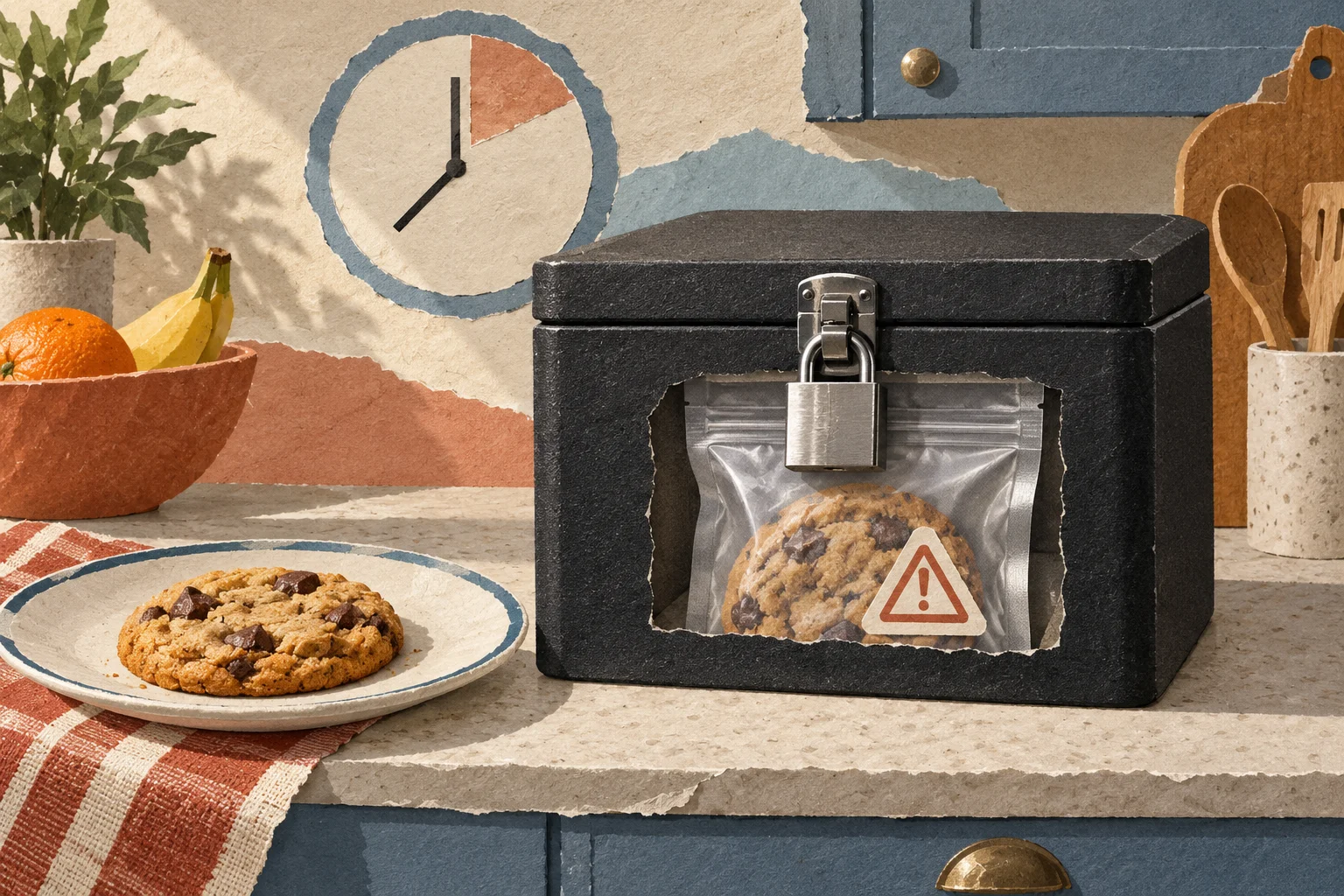
A cookie on a kitchen counter gives few clues about what is inside it. That is part of the risk with cannabis edibles: an ordinary-looking food can contain THC, and someone may eat it without realizing. The US Food and Drug Administration has documented accidental consumption involving both children and adults. Responsible cannabis storage starts with recognizing how easily that mistake can happen. [1]
Familiar packaging can send the wrong message
The FDA’s June 2022 alert describes THC products made to resemble familiar cereals, candies and cookies. Similar names, logos and pictures can make a cannabis product look like an everyday snack. For someone reaching for a recognizable treat, the package’s appearance can communicate something very different from its contents. [1]
This makes accidental exposure more than a question of whether someone understands cannabis. A person must first recognize that the food contains it. The practical lesson from the FDA warning is to treat resemblance to ordinary food as a hazard in its own right, especially where children could encounter the product. [1]
The delay can hide the mistake
Edibles also have a timing problem. In its February 2024 guidance, the US Centers for Disease Control and Prevention says intoxicating effects can take 30 minutes to two hours to appear. Someone may eat more before noticing an effect, increasing the risk of poisoning or serious injury. That delay makes an initial lack of obvious effects a poor basis for reassurance. [2]
The experience can also last longer than expected. The CDC identifies factors including food in the stomach, alcohol, medications and the amount consumed. It also cautions that THC strength may be unknown or inaccurately labeled. A familiar shape or small-looking piece therefore cannot reliably tell someone how strong the effects will be. [2]
Give edibles a separate home
Health Canada’s August 2025 storage guidance recommends keeping cannabis locked away, outside the sight and reach of children and pets, and separating edibles from regular food and drinks. A practical application is to choose a dedicated secure storage location before bringing a product into the household. [3]
Keep products in their original packaging. For homemade edibles, Health Canada advises clear labeling so they are identifiable as something other than regular food. Moving a product into a household snack container works against that distinction. Original packaging, separation and locked storage provide different safeguards; use them together. [3]
The same guidance says never to leave cannabis unattended where children can access it. Make returning the package to secure storage part of handling it, including after opening it. A high shelf alone does not fulfill the recommendation to keep cannabis locked away. Health Canada suggests a secure cupboard with a strong childproof lock or latch, or a lockbox. [3]
Know when to get help
Children who consume THC can become seriously ill. The CDC describes possible problems with walking, sitting up or breathing. These are reasons to take an exposure seriously, but recognizing a particular symptom should not be a prerequisite for seeking advice. [2]
For readers in the United States, the FDA advises calling Poison Control at 1-800-222-1222 if a child has consumed a THC edible, without waiting for symptoms. For serious side effects, call 911 or get emergency medical help immediately. Those contact instructions are specific to the US. [1]
