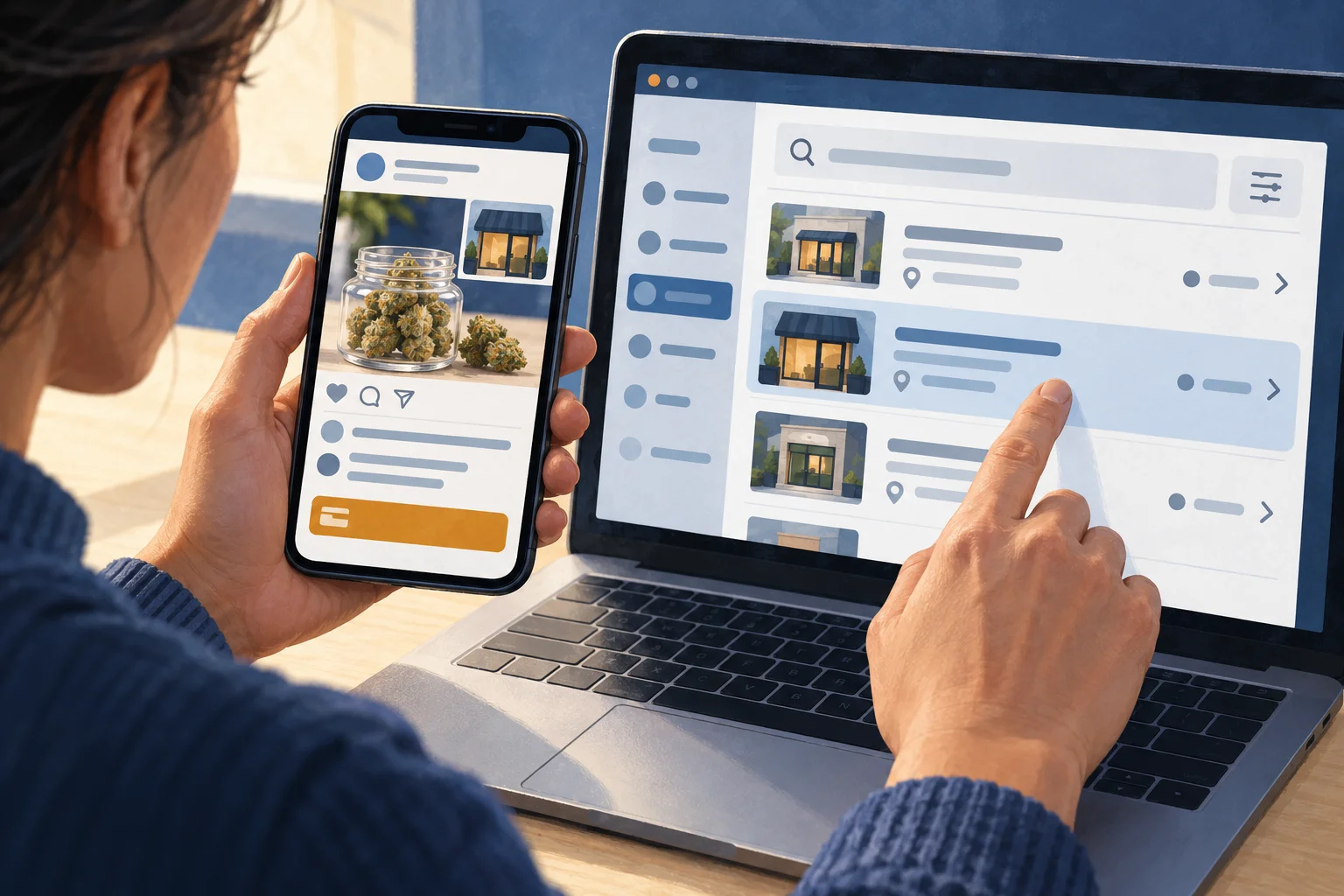
A polished profile, familiar logo and stream of enthusiastic comments can make a cannabis offer look established. But a social-media page is not proof that a seller is licensed—or that the product is genuine. In the United States, the FTC says shopping scams were the most reported scam on social media; its data describes general shopping scams, not cannabis sales specifically. [1]
Start with the regulator, not the profile
Rules for cannabis sales differ by place. In Canada, for example, provinces and territories decide how cannabis is sold and who may sell it. Health Canada advises buyers to use the official retailer list for their province or territory. That’s a useful general habit: find your local regulator’s website independently, then search its list for the seller’s exact business name and location. [2]
A seller’s own website, social account, customer comments or claimed licence number may help you identify what to check, but they don’t replace confirmation from the relevant regulator. New York State offers one example of an official check: its Office of Cannabis Management lists licensed dispensaries and describes a verification tool displayed at licensed storefronts. Those systems are specific to New York; look for the equivalent authority where you are. [4]
Notice what the offer asks you to do
Pause if the account pushes you to pay immediately, move the conversation to private messages, or use a payment method that’s difficult to reverse. The FTC recommends researching a seller outside the social platform and searching its name alongside terms such as “scam” or “complaint.” It also warns about online sellers who insist on payment by gift card, wire transfer, payment app or cryptocurrency. [1]
In Canada, Health Canada lists several signs of a potentially illegal cannabis retailer: no age verification, referral or sign-up bonuses, offers to ship everywhere in the country, or requests for e-transfer or cryptocurrency when credit cards are not accepted. These are warning signs, not a universal checklist for every jurisdiction, and one sign alone does not establish who operates an account. [2]
A familiar package is not a safety check
A photo of branded packaging, a product label or a lab report can be copied or altered. In Canada, legal non-medical cannabis is sold through retailers authorized by a province or territory, and legal products have required label features such as an excise stamp and standardized cannabis symbol. Health Canada also says legal products are quality controlled and tested, while illegal products may have unknown or misleading THC and CBD information and may contain contaminants. These details are Canadian rules; packaging requirements differ elsewhere. [3]
If a seller sends a QR code or certificate, don’t treat it as proof by itself. Check whether the relevant local regulator explains how to verify a retailer or product, and compare the seller’s exact identity with that official information. New York’s regulator, for instance, tells consumers to check both the storefront verification tool and product label, and to look for a QR code or link to the product’s Certificate of Analysis. [4]
If something feels off
Don’t send money or personal documents while you’re still trying to establish who the seller is. Save the account name, messages and payment instructions in case you need to report the interaction. If you already paid, contact your payment provider promptly and use your jurisdiction’s official consumer or law-enforcement reporting channel. In Canada, Health Canada directs people concerned about a possible illegal cannabis retailer to local law enforcement or the nearest RCMP detachment. [2]
A quick rule of thumb: verify the business through an official source, independently confirm its contact details, and stop if the seller is rushing you or blocking ordinary checks. No social feed can settle the rules for every place, but a regulator’s retailer list gives you a solid first question to ask: does this seller appear there?
