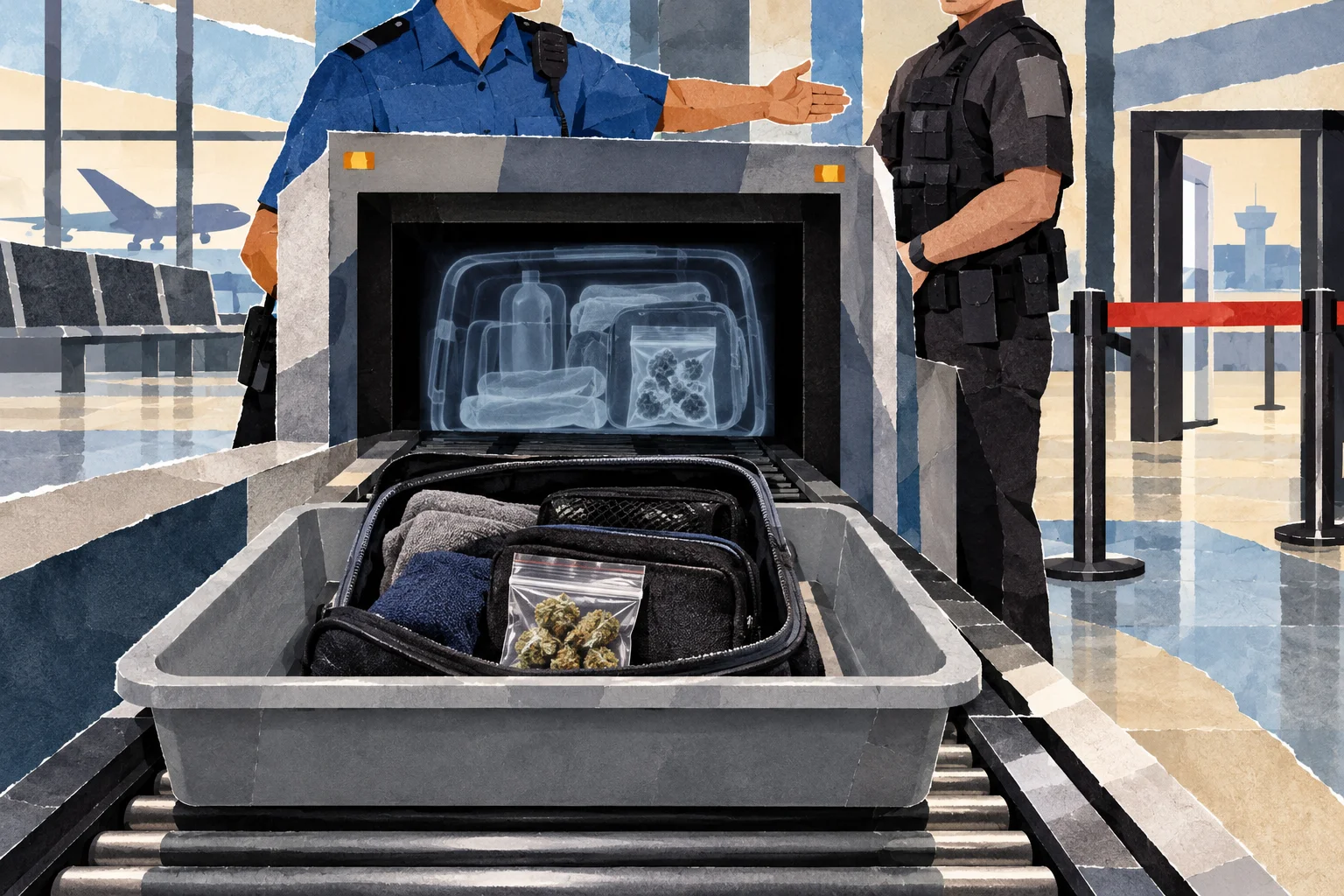
Cannabis airport security can sound like a simple yes-or-no question: “Will TSA let me through?” But airport screening answers a narrower question. TSA checks for threats to aviation and passengers; its officers do not search for marijuana or other illegal drugs. If they find a substance they suspect is illegal, they refer it to law enforcement. Getting through a checkpoint, then, is not proof that carrying a product was lawful. [1]
The checkpoint is not a cannabis shop, a legal adviser, or a promise that a product can travel with you. It is one step in a trip governed by rules that may differ by place and by activity. A product’s availability for purchase, your right to possess it, permission to consume it, and access for a tourist are separate questions. A state’s rules do not settle every federal or local question raised by air travel. [1]
What TSA says about cannabis
TSA’s current “What Can I Bring?” listing says marijuana and some cannabis-infused products, including certain CBD oils, remain illegal under federal law, with stated exceptions for products containing no more than 0.3 percent THC on a dry-weight basis or products approved by the FDA. That description is a screening reference, not a general finding that every product labeled “hemp,” “CBD,” or “medical” is lawful to carry. Check the product’s actual status against current official rules; a label alone does not establish an exception. [1]
The distinction matters because screening officers focus on security, not on certifying each traveler’s cannabis product or resolving every state-law question at the checkpoint. TSA says that when an illegal substance is discovered, officers refer the matter to law enforcement. The response may therefore depend on what the item is and the rules that apply where the airport is located. The TSA page does not promise that an item will be ignored, seized, or treated the same way at every airport. [1]
Four questions for a trip plan
Before packing, separate four questions. First, can you legally buy the product where you are? Second, may you possess it at the airport and during the journey? Third, may you consume it where you will be staying? Fourth, can a visitor access it under the destination’s rules? An answer to one does not automatically answer the others. Check the rules for your departure location, destination, and any place where you will stop, and consult current official sources for each. [1]
If you cannot confirm that the product qualifies for a federal exception and is permitted through every part of your journey, do not treat TSA screening as a workaround. TSA’s listing is specific to federal security screening; it does not promise that state or local authorities will permit possession, consumption, or tourist access. When the rules are unclear, leave the product out of your luggage and ask the relevant authority before traveling. [1]
The useful takeaway is modest: airport security is not legal clearance. TSA tells travelers what its officers screen for and what may happen if a suspected illegal substance is found. It does not grant permission to purchase, possess, consume, or access cannabis at a destination. Keeping those decisions separate makes a travel plan easier to check—and less likely to rest on an assumption. [1]
