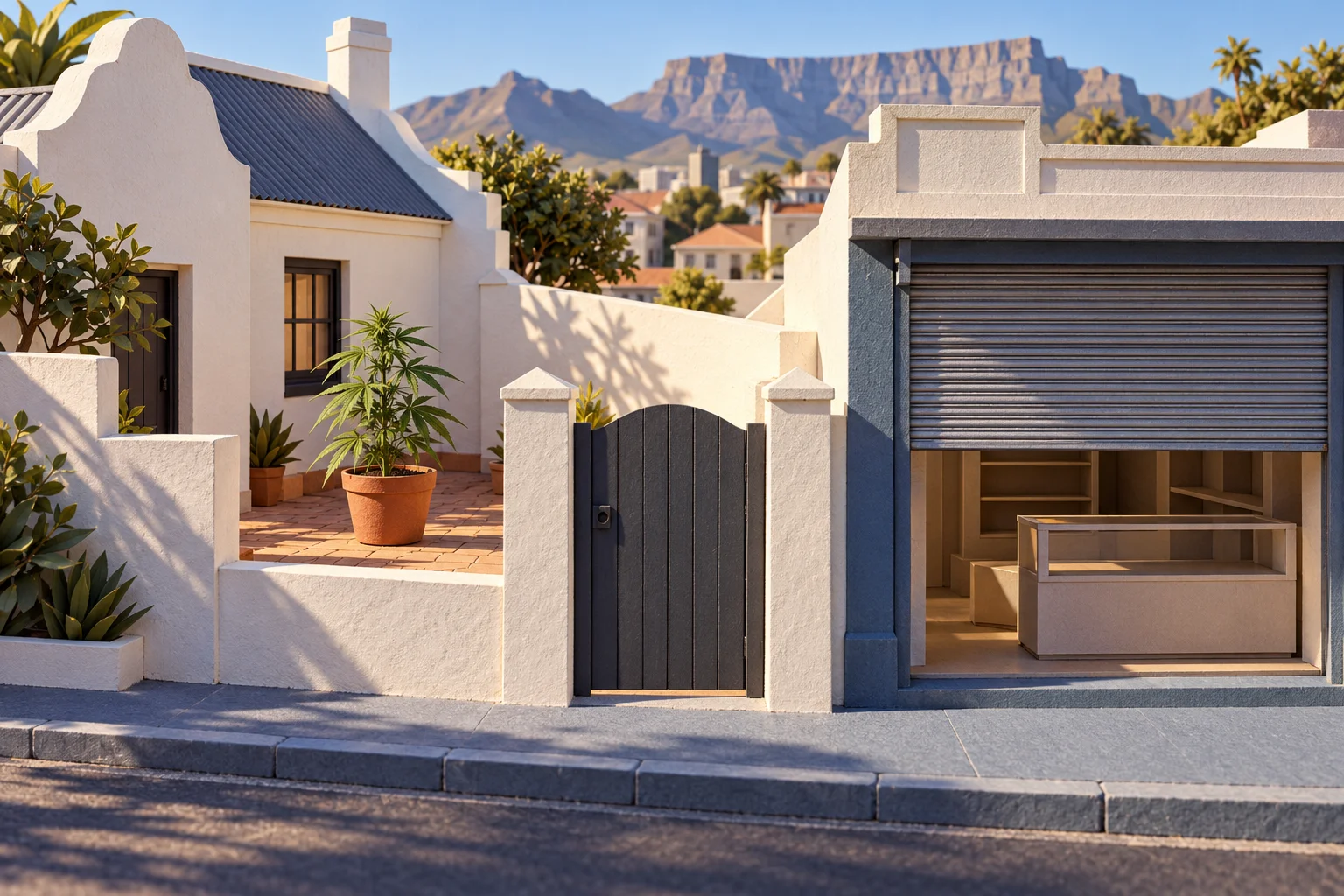
South Africa’s cannabis rules are easiest to misunderstand when “private use” gets treated as a general green light. The key distinction is between an adult using cannabis privately and a commercial market where people buy and sell it. Those are separate legal questions, and the rules for one do not automatically answer the other. [1]
The private-use foundation
In 2018, South Africa’s Constitutional Court ruled that criminalising an adult’s private use or possession for personal consumption, and private cultivation for personal consumption, was unconstitutional. The ruling went beyond the home: the court said privacy is not limited to the walls of a dwelling. It did not create a legal retail system or extend the ruling to buying and selling. [1]
Parliament later passed the Cannabis for Private Purposes Act 7 of 2024. The Act sets out a framework for adult private use, possession, cultivation and transportation. It defines adults as people aged 18 or older and prohibits dealing in cannabis. The government’s Act page says the Act’s commencement is “to be proclaimed,” so its passage into law should not be mistaken for every part of its framework already being in force. [1][2]
Private use is not a sales licence
For a visitor or resident trying to understand the market, this is the practical dividing line: private adult use has constitutional protection, but that does not mean a shop can sell cannabis under the private-use rules. The Justice Ministry states that the Constitutional Court did not extend its decision to buying and selling. It also says commercial cultivation, buying and selling fall outside the 2024 Act and are being addressed through other government work. [1]
The 2024 Act describes a narrow private exchange between adults without payment or other consideration, while separately prohibiting dealing. That wording is not permission for a storefront, a paid delivery service or a business to treat a sale as personal use. Claims that a “gift,” membership fee or club arrangement makes a commercial transaction lawful should be checked against current official rules; the private-use framework alone does not establish that. [2]
Place and possession are separate questions
The Act’s text distinguishes possession from use: it provides that an adult may possess cannabis in a public place, but not use it there. It also restricts private use where a child or a non-consenting adult is present, and includes restrictions related to nearby entrances, windows and places where people gather. These provisions matter because “private use” is not simply a description of who owns the cannabis; the setting and circumstances matter too. [2]
The Act’s text also calls for regulations setting maximum quantities for possession, cultivation and transportation. In February 2026, the Justice Ministry described proposed limits as draft rules and said the proposed amounts would need approval before taking effect. The proposed figures should therefore not be repeated as settled limits without checking for a later official update. [1]
A useful way to read the rules
Ask three questions separately: Is the person an adult? Is the conduct private personal use, or is it a sale or other dealing? Where is the cannabis being possessed or used? That simple checklist avoids the most common leap in interpretation: assuming that because private adult use is protected, buying from a seller or using cannabis in public must also be allowed. The official sources support no such blanket conclusion. [1][2]
For current decisions, check the latest South African government notices and the text of the Act. The 2024 statute, the Constitutional Court’s ruling and later regulations or proclamations can have different roles, and updates may affect the details. This article summarizes the official material available for this publication; it is not a substitute for checking the current law in the specific situation. [1][2]
